
Most RV roof problems do not start with a dramatic leak. They start with a hairline crack in the sealant, a compressed A/C gasket, or a small tear in the membrane that goes unnoticed until water has already done its damage. In Louisiana, where UV intensity, humidity, and rainfall push roofing materials to their limits year-round, those small issues escalate faster than owners expect. The most common problems found during RV roof inspections include sealant failure, membrane deterioration, A/C gasket leaks, and slide-out roof wear. Throughout this guide, the team at RV Masters in LaPlace, LA, walks you through each one, what the warning signs look like, and what happens when they go unaddressed.
Why Louisiana's Climate Is a Roof's Worst Enemy
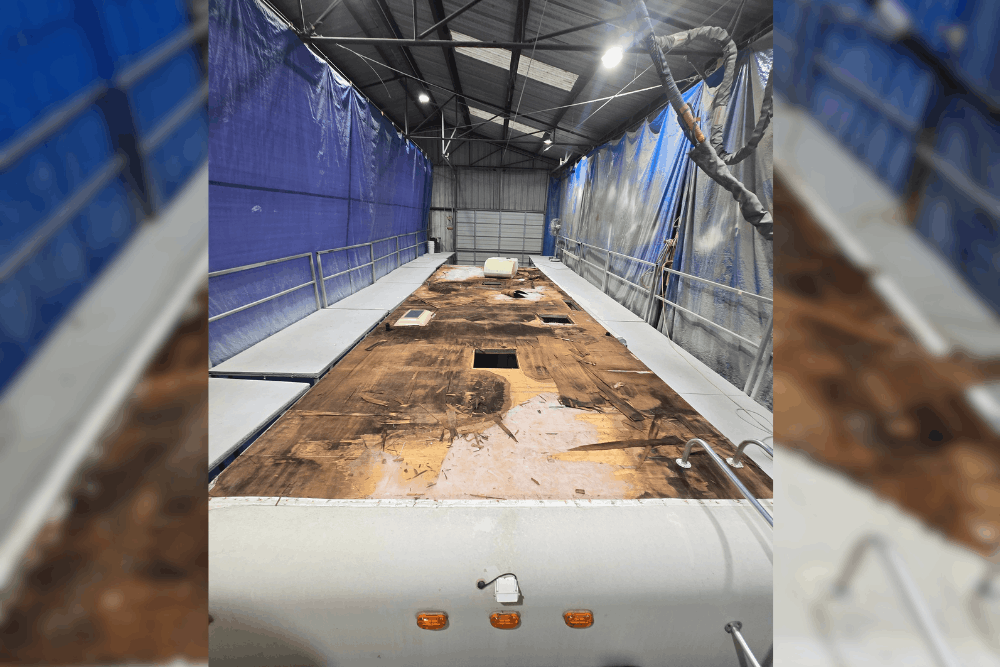
Most RV roofing materials are designed to flex slightly as temperatures change. In Louisiana, that cycle is extreme. Here is what your roof is up against year-round:
- Heat and UV exposure: Surface temperatures on a dark RV roof can exceed 160 degrees Fahrenheit on a summer day.
- Humidity: Moisture works into every small crack and gap, accelerating rot and mold growth behind the scenes.
- Heavy rain events: Louisiana averages over 60 inches of rain per year. Even a small sealant gap becomes a serious problem fast.
- Rapid weather changes: Temperature swings cause roofing materials to expand and contract repeatedly, wearing them down season after season.
Understanding this environment is the first step in understanding why RV roof repair in Louisiana is not just a maintenance item. It is a priority.
The Most Common RV Roof Problems Technicians Find During Inspections
1. Sealant Failure Around Roof Penetrations
Sealant is applied around every vent, antenna, skylight, and edge on your RV roof. It is also the first thing to go. UV rays dry it out, heat causes it to shrink, and over time, it cracks and pulls away, leaving gaps that water exploits immediately.
Signs to watch for:
- Chalky, brittle, or discolored caulking around vents
- Visible gaps or cracks near roof edges and seams
- Interior water stains near ceiling vents or skylights
Sealant failure is one of the most common issues uncovered during an RV roof inspection. Left alone, it leads directly to water damage inside the roof structure.
2. Membrane Cracks, Surface Delamination, and Deck Rot
Rubber and TPO membranes take the full brunt of Louisiana’s sun. Over time, they develop surface cracks, small tears, and in some cases, delamination where the membrane begins separating from the roof deck. Once moisture gets underneath, wood rot follows quietly, and by the time a soft spot appears or a ceiling panel sags, the repair scope has grown considerably.
What to look for:
- Soft or spongy areas when walking on the roof
- Brown or yellow staining on ceiling panels
- A musty or damp smell inside the coach
- Warping near windows, slide-outs, or overhead cabinets
This type of damage is often invisible from the ground. A hands-on roof inspection is the only reliable way to catch it early.
3. A/C Gasket Leaks
Your rooftop A/C unit sits on a gasket that seals it to the roof surface. That gasket compresses and dries out over time, especially under Louisiana’s summer heat. When it loses its seal, you have a direct water entry point right above your living space. These leaks are frequently missed during owner self-inspections because interior staining near the ceiling unit may not appear until moisture has already accumulated in the roof structure.
4. Slide-Out Roof Wear and Seal Failure
If your RV has a slide-out, it has a secondary roof surface that is easy to overlook. The topper, the rubber seal along the top edge, and the contact points where the slide-out meets the main roof all accumulate debris and wear down over time.
Common slide-out roof issues found during inspections:
- Debris buildup causing pooled water along the topper
- Torn or compressed edge seals
- Wear points at the main roof contact zone
- Water intrusion along the interior slide-out ceiling
What You See vs. What Is Happening
Sometimes what you notice on the surface tells a different story than what is going on underneath. This table breaks down the visible signs versus the underlying issue technicians often find during a professional RV roof inspection.
| What You See | What It Usually Means |
|---|---|
| Chalky or cracked caulking | Sealant failure at roof penetrations |
| Water stain on interior ceiling | Active or past roof leak, possible deck rot |
| Soft spot when walking on the roof | Water-damaged roof decking beneath the membrane |
| Bubbling near a vent or skylight | Moisture trapped under the membrane surface |
| Musty smell inside the coach | Mold or mildew growth from prolonged moisture |
| Staining near the A/C unit | Failed A/C gasket allowing water infiltration |
If you are seeing any of these signs, a professional RV roof inspection is the right next step before the problem grows larger.
How Long Should an RV Roof Last in Louisiana?
The honest answer depends on the roofing material and how well it is maintained. Louisiana’s climate shortens the lifespan of most traditional roofing systems faster than owners expect.
| Roof Type | General Lifespan | Louisiana Reality Without Maintenance |
|---|---|---|
| EPDM Rubber | 10 to 20 years | Degrades faster under constant UV and humidity |
| TPO Membrane | 10 to 15 years | Surface cracking accelerates with heat exposure |
| Fiberglass | 20 plus years | Seams still require regular attention |
| FlexArmor / Flex Armor | 10 plus years | Holds up well due to seamless application |
The seamless nature of FlexArmor roofing is why it performs particularly well in climates like Louisiana’s. Traditional roofs rely on sealants at every seam and penetration. Eliminate the seams, and you eliminate most of the failure points.
What Louisiana RV Owners Should Know About FlexArmor Roof Issues
FlexArmor, also referred to as Flex Armor, is a spray-applied roofing system that creates a single continuous surface with no seams, no caulk lines, and no exposed edges for water to penetrate. It is one of the most effective solutions for the climate challenges Louisiana RV owners face throughout the Greater New Orleans Area, Baton Rouge, Lafayette, and Mississippi.
Even so, FlexArmor roof installations benefit from periodic inspection. Issues can still develop from:
- Impact damage from storm debris or low-hanging branches
- Repairs attempted by non-authorized installers
- Damage at penetration points added after the original installation
- Harsh chemical cleaners that break down the coating surface
If you have a FlexArmor roof or are considering making the switch from a traditional membrane, get a quote or schedule a consultation here.
Ready to get your RV roof inspected? Contact RV Masters at 1041 E. Airline Hwy., LaPlace, LA 70068, or call (504) 466-3431 to book your appointment today.
Why RV Roof Inspections in Louisiana Require a Certified Eye
A rooftop walk-around is not the same as a professional inspection. Certified RV technicians know where water hides, which components fail first in Southern climates, and what to look for beneath the surface.
At RV Masters in LaPlace, LA, our RVDA/RVIA certified mechanics use a full-service facility built for RV-scale work, including scaffolding and fiberglass repair equipment, to thoroughly evaluate every roof system. We are also Louisiana’s exclusive authorized FlexArmor installer, giving our team a level of roof system expertise that goes beyond a standard inspection.
We serve RV owners across St. John the Baptist Parish, the Greater New Orleans Area, Metairie, Jefferson Parish, Baton Rouge, Lafayette, and Mississippi.
FAQs About Common RV Roof Problems and RV Roof Repair in Louisiana
What causes RV roofs to leak?
RV roofs leak most often because of failed sealant around vents, edges, or roof penetrations. UV exposure, heat cycles, and age break down sealant materials, creating gaps where water can enter. Regular RV sealant inspections help catch these failures before they cause interior damage.
Can FlexArmor roofs develop issues?
FlexArmor roofs are highly durable and eliminate the seams that cause most traditional roof leaks, but they can still be damaged by impact, improper repairs, or post-installation penetration work. Periodic inspections by an authorized installer help confirm the coating remains intact and performing as intended.
How do I know if my RV needs roof repair?
Signs your RV may need roof repair include water stains on interior ceilings or walls, soft spots on the roof surface, cracked or missing sealant, and bubbling or delamination of the roof membrane. If you notice any of these, scheduling a professional roof inspection is the next step.
What are signs of water damage in an RV roof?
Common signs of water damage in an RV roof include soft or spongy areas when walking on the roof, discoloration or staining on interior walls, a musty odor inside the coach, and visible mold or warping near windows and slide-outs. Early detection prevents damage from spreading further.
How long should an RV roof last in Louisiana?
A traditional RV roof membrane can last 10 to 20 years with proper maintenance, but Louisiana’s heat, humidity, and UV exposure can shorten that lifespan significantly without regular care. Spray-applied roofing systems like Flex Armor tend to offer longer-lasting protection in harsh Southern climates.
Schedule Your RV Roof Inspection at RV Masters in LaPlace, LA Today
Protecting your RV starts at the top. If your roof has not been professionally inspected recently, now is the right time to get it checked by a team that knows Louisiana RV roof repair inside and out.
Visit RV Masters at 1041 E. Airline Hwy., LaPlace, LA 70068, or call (504) 466-3431 to schedule your inspection. We proudly serve RV owners throughout the Greater New Orleans Area, Baton Rouge, Lafayette, Mississippi, and St. John the Baptist Parish.


